Case Study: Parliamentary Study Tour & Training with The Judicial Committee of the Parliament of Ghana
The Judicial Committee of the Parliament of Ghana commissioned ICGP to design and deliver a bespoke parliamentary study tour and training programme in London. The five-day programme – combining expert-led sessions with exclusive access to the UK Houses of Parliament and the UK Supreme Court – equipped the delegation with practical frameworks for strengthening parliamentary oversight of the judiciary, while preserving judicial independence. Every participant rated the programme ‘Excellent’ or ‘Very Good’.
About the Client
Ghana operates a constitutional democracy in which the Parliament of Ghana exercises legislative authority and holds the executive and judiciary to account. The Judicial Committee is one of Parliament’s key oversight bodies, with responsibility for scrutinising the administration, conduct, and expenditure of Ghana’s judicial system.
The relationship between parliament and the judiciary is one of the most delicate in any democratic system – requiring robust oversight mechanisms that hold the courts to account without encroaching on judicial independence. Getting this balance right is essential to public confidence in both institutions.
The Judicial Committee approached ICGP seeking international comparative learning to strengthen its members’ capacity to fulfil this oversight role effectively.
The Challenge
The Judicial Committee faced a genuinely difficult institutional challenge: how to exercise rigorous parliamentary scrutiny of the judiciary – including its administration and spending – without undermining the principle of judicial independence on which Ghana’s constitutional order depends.
Internationally, this is an area where practice varies significantly across democratic systems. The Committee wanted to move beyond abstract principle and understand concretely how other parliaments navigate this tension – what inquiry mechanisms they use, how they engage with senior judicial figures, and how they build productive working relationships between the executive, the legislature and the courts.
Three specific needs emerged from ICGP’s consultations with the delegation:
- Understanding how parliamentary committees in the UK and comparable democracies gather information and conduct inquiries into judicial administration and spending.
- Building practical knowledge of how to engage with senior members of the judiciary – including the Lord Chief Justice and Secretary of State for Justice – in ways that are appropriately rigorous without being adversarial.
- Learning from real-world examples of effective parliamentary-judicial cooperation across multiple jurisdictions, including the UK, Europe, and Canada.
ICGP’s Approach
Needs Assessment
ICGP conducted a structured needs assessment in consultation with the Judicial Committee’s leadership prior to programme design. This process clarified the delegation’s existing knowledge and experience, identified the specific gaps they sought to address, and established the practical outputs they hoped to take back to Ghana.
The assessment confirmed that the group required a blend of formal expert input, comparative case studies, and direct experiential learning – the kind of access to institutions and practitioners that only a bespoke programme could deliver.
Programme Design
Drawing on the needs assessment, ICGP designed a five-day programme structured around six core objectives:
- Strengthen collaboration between the judiciary, legislature, and parliament.
- Build comparative understanding of parliamentary-judicial relations in the UK, Europe, Canada, and beyond.
- Analyse good practice in the duties, procedures, and responsibilities of parliamentary committees.
- Review the functions and relationships within the UK and other judicial systems.
- Provide direct access to leading UK parliamentary and judicial institutions.
- Reinforce principles of accountability and transparency across parliament and the judiciary.
The programme was deliberately structured to move between theory and practice – alternating expert-led content sessions with direct institutional visits, so that learning was grounded in first-hand experience rather than abstract discussion.
Programme Delivery
Expert Speaker Faculty
One of the programme’s defining features was the calibre of its speaker faculty – each chosen for their direct experience at the intersection of parliamentary and judicial affairs:
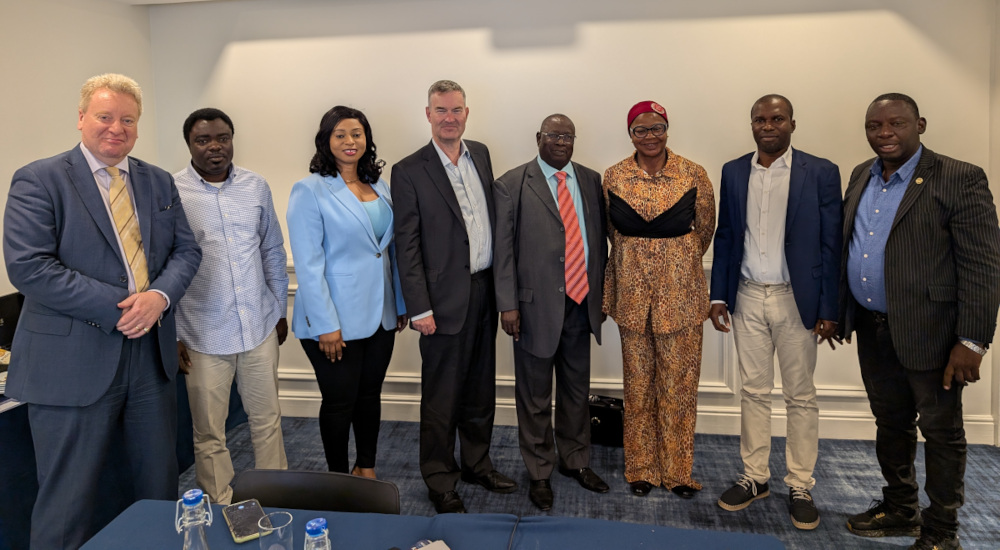
- David Gauke, Former UK Secretary of State for Justice & Lord Chancellor, offered first-hand insight into the executive’s role in mediating the parliament-judiciary relationship and managing political pressure on judicial independence.
- Huw Edwards, Former UK Member of Parliament, led core sessions on select committee procedure, inquiry conduct, and effective parliamentary engagement with public institutions.
- Alex Clark, Secretary, UK Judicial Executive Board, provided an inside view of how the senior judiciary manages its relationship with Parliament and government, including on matters of accountability and spending.
- Vicky Fox, Chief Executive, UK Supreme Court, hosted the delegation at the Supreme Court and shared how the Court manages its institutional independence while remaining accountable to Parliament.
Institutional Visits
Alongside the expert sessions, the programme included exclusive access to two of the UK’s most prestigious constitutional institutions:
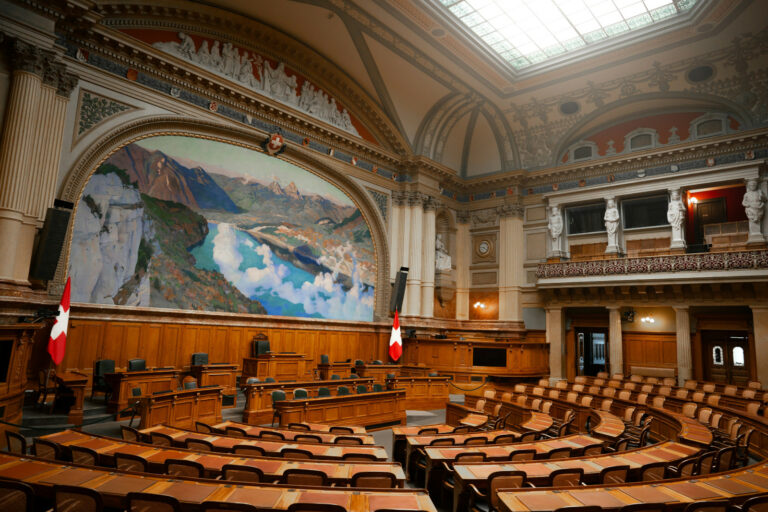
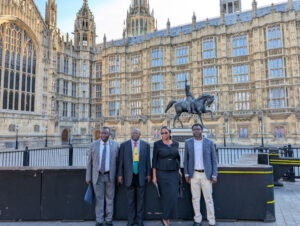
- UK Houses of Parliament – a guided tour and working session examining how parliamentary committees operate in practice, with particular focus on scrutiny mechanisms relevant to the judiciary.
- UK Supreme Court – a tour and meeting with Chief Executive Vicky Fox, exploring how the Court maintains independence while engaging with Parliament on matters of administration and accountability.
These visits transformed abstract learning into tangible experience – giving delegation members a direct understanding of how institutional relationships work in practice at the highest levels of the UK constitutional system.
Topics Covered
- Analysing the functions of Parliament and the Judiciary
- Conduct, stages, and outcomes of Select Committee inquiries
- The relationship between the Legislature and Judiciary
- Collaborative working and stakeholder management
- Parliamentary Committee questions to leaders in the Judiciary and Legislature
- The role of the Head of the Judiciary, Lord Justice, and Secretary of State for Justice: influencing and relationship building
- Establishing independence and respect between Parliament and the Judiciary
Results:
100% of participants rated the programme ‘Excellent’ or ‘Very Good’
Beyond the satisfaction rating, participants left the programme with:
- A clear comparative framework for understanding how different democracies manage the parliament-judiciary relationship – and how lessons from the UK, Europe, and Canada can inform practice in Ghana.
- Practical inquiry tools and committee procedures directly applicable to the Judicial Committee’s oversight responsibilities.
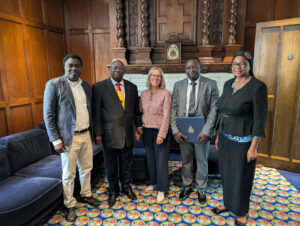
- Established relationships with senior UK parliamentary and judicial figures, creating a network for ongoing learning and dialogue.
- Direct experience of institutions – the Houses of Parliament and the Supreme Court – that brought the programme’s conceptual content to life.
What Participants Said
“The course has been very insightful and enlightening for our role in the Judiciary Committee of the Parliament of Ghana. The topics were taught by very knowledgeable trainers and they were very receptive to questions. They also responded well to our need for the training. The programme has strengthened my knowledge on the oversight roles and comparative practices. It has been a very beneficial programme.” Chair of the Judicial Committee, Parliament of Ghana
“It has opened my eyes to the best practices when conducting committee duties between the judiciary and the executive. The trainers were all fantastic and very knowledgeable in their work. I would take this training course again with the same trainer given the opportunity!” Member, Judicial Committee, Parliament of Ghana
Impact
This programme demonstrated what becomes possible when capacity-building is designed around direct, experiential learning rather than classroom instruction alone. By securing access to the Houses of Parliament, the UK Supreme Court, a former Cabinet minister, and the Supreme Court’s Chief Executive, ICGP gave the Judicial Committee an experience that no reading list or virtual session could replicate.
Members of the delegation returned to Ghana better equipped to:
- Lead and conduct committee inquiries into judicial administration and spending with greater rigour and confidence.
- Navigate the constitutionally sensitive boundary between legislative oversight and judicial independence.
- Apply comparative best practice from the UK, Europe, and Canada to the specific context of Ghana’s parliamentary-judicial relationship.
- Engage constructively and effectively with senior members of Ghana’s judiciary.
The programme reflects ICGP’s distinctive ability to combine expert-led learning with exceptional institutional access – an offering of particular value to parliamentary delegations seeking to learn from Westminster’s long experience of democratic governance.
Interested in a Parliamentary Study Tour or Bespoke Training?
ICGP designs and delivers bespoke parliamentary study tours, training programmes, and capacity-building initiatives for legislatures, committees, and governance institutions worldwide. Our London-based network gives clients access to Westminster’s parliamentary and judicial institutions.
Enquire now: [email protected] or call us on +44 (0) 207 167 8387